Estyn - Page 4 of 5 -

Postiadau Diweddaraf


Postiadau Diweddaraf


A collage showing people using laptops in various settings

Social stories smooth return to school

At one all-age special day school for pupils with a range of significant, complex and multiple needs, staff prepared social stories for pupils to share with their parents and carers prior to the pupils returning to school to address possible issues and concerns that might arise. These social stories included fun activities and songs to help pupils become aware of social distancing under the slogan “Be smart … Stay apart”. The headteacher believes that these reassuring messages have enabled smooth transitions on return for nearly all pupils. They have adapted well to re-opening and have re-engaged happily, settling very well into their new school routines and environment.

Staff wellbeing survey

One all-age special school for pupils with a range of significant, complex and multiple needs surveyed all staff about their wellbeing prior to returning to work. This survey included questions such as:

  1. Given the circumstances and our unique setting, how confident do you feel coming in to school?

  2. Throughout the Coronavirus pandemic, do you feel that your wellbeing as an employee of our school has been taken seriously?

  3. *Applicable to those whom have been shielding/socially distancing* How do you feel you have been supported whilst shielding/socially distancing at home?

  4. Our school and the local authority have provided us with appropriate PP. Do you feel you have enough guidance and relevant information to use this effectively?

  5. With the introduction of the staff Facebook page, Hwb and ParentMail, how well do you feel that senior leaders have communicated with you throughout recent weeks and months?

Installing a traffic management plan

One all-age special school has put in place a new traffic management plan for re-opening that has already brought many benefits. The plan includes the use of additional entry points into the school buildings, which has reduced the flow of people. It has also ensured that escorts and parents remain in their vehicles until advised by staff to bring their children in to school. This has reduced congestion at the start and end of the day. The school has also introduced a fifteen minute interval between start times for primary and secondary pupils.

Creating ‘Corridor bubbles’

One all-age residential and day special school for pupils with moderate and severe learning difficulties, profound and multiple learning difficulties or autistic spectrum disorders has classes organised in five ‘corridor bubbles’. The pupils in each bubble have their own learning, play and hygiene spaces. Pupils currently eat their meals either in their classes or in the canteen, but leaders will reconsider this when all pupils return.

Creating social stories

One special school has made successful measures in supporting pupils through developing individual “social stories” that describe their current situation. These “social stories” are having a particularly positive impact on pupils with autism.

Safe distance home visits

One special school organises minibus visits around the county twice weekly. This allows physical resources to be delivered to families, for example mobility aids and ICT equipment. This has been very popular with staff and families and allows valuable face to face interaction at a safe distance.

Weekly tasks via email

At one special school, pupils’ remote learning is supported by weekly tasks sent via email and tweeted to parents, as well as providing devices for those pupils that require assistance. The weekly timetable incorporates tasks within the six Areas of Learning and Experience. Tasks are predominantly related to life skills and include activities such as online fitness, Makaton sign of the week and artwork to thank the NHS.

Staff videos help maintain routine

One special school has been focusing on supporting families with an older child with ASD and behaviour that is more challenging to achieve suitable and beneficial routines within the home. For example, a teacher is producing videos that instruct families about how to create sensory stories at home. These resources and activities have generated positive engagement when pupils can see their teacher and other staff on the screen, and their routine is unchanged.

Triage Team support

A Cardiff and the Vale Health Board multi-agency Triage Team has operated from one special school since the outbreak of COVID19. It consists of staff from school, occupational therapy, speech and language therapy, psychology, dietician, social and health care and paediatric nurses and doctors. Parents and pupils can access the services on an appointment basis. Although initially established to cater for pupils of the federation, it then included all Cardiff special schools and specialist units. At present the triage team is available to all Cardiff schools. A multi-disciplinary team, made up of school staff and members of the triage team, meets weekly to discuss concerns about any pupils connected to the federation. A key focus on safeguarding ensures that all pupils, particularly those most vulnerable, are monitored closely.

Managing parental expectations

The headteacher at one special school believes that managing parental expectations regarding blended and distance learning is key. The main challenge for parents is managing their sometimes very challenging children. The federation is considering options for how to manage phased reopening well. However, limited provision will not be sufficient for families already in crisis and those with work commitments.

Hot chocolate rewards

At one special school, “hot chocolate Friday” has continued as part of the school’s reward system. The headteacher encourages pupils to report what has been going well and a weekly video is made and shared to celebrate pupils’ work at home. Achievements are rewarded for different aspects of the curriculum each week.

Postiadau Diweddaraf


A collage showing people participating in a video call, live streaming, working on a laptop while taking notes, and typing on a keyboard.

Virtual open days

One secondary school held a programme of virtual open days for its Year 11 pupils. Each day featured a different subject available to pupils in the sixth form. Following this, the school ran a timetable of research and reading tasks followed by live seminars with the sixth form teachers based around the option choices. This was very well received, with 85% of Year 11 pupils participating.

Setting clear expectations

Bassaleg School, Newport
Leaders provided detailed guidance for staff, with clear expectations and support for blended learning.  

This gave staff an overview of the planning and learning process and asked them to focus on purpose, structure, scaffolds and reflection. Staff were asked to follow this learning cycle when planning their blended learning approaches. They agreed that all synchronous distance learning will be recorded, including any material that is presented on screen and any conversations, comments made during the lesson.  

The school provided a clear behaviour policy to follow in order to support staff to manage synchronous distance learning, and these expectations were shared with pupils and parents.  

Parents and pupils were also provided with guidance.

Adopting a flexible approach

Caldicot School, Monmouthshire
The school has adapted its approaches to teaching and learning and has used its learning cycle to focus more clearly on successful blended learning approaches and to continue to develop teaching in the current climate. As teachers are required to spend more time at the front of the class during face-to-face teaching, the school has had a clear focus on modelling, demonstrating and reviewing learning. Teachers have been grouped together to plan and develop resources for face-to-face and distance teaching in order to reduce workload and promote equity of experience for pupils. 

Leaders produced a helpful guide for staff, which outlines clear expectations for teaching in school and when groups are required to isolate or if there are any future lockdowns. The headteacher has provided opportunities for staff to pilot these approaches and through running practice responses to scenarios. As a result, the headteacher feels that nearly all staff are well prepared for any future adaptions that may be required.   

In order to continue their focus on improving teaching, leaders have developed a website to share effective practice. Teaching and learning leads review and quality assure this work and, generally, staff are responding positively to this approach. The school has paused lesson observations and has implemented more frequent monitoring of pupil work.

Evolving and evaluating

Cantonian High School, Cardiff
The school has taken a number of steps to develop a logical approach to the delivery of blended learning that has been informed by evaluation of their approaches through the first lockdown period and research undertaken by senior leaders and staff.

The school evaluated the impact of different approaches to distance learning based on the engagement of pupils on a rolling basis. They found that one of the most successful approaches was the use of ‘two week challenges’ which involved parents and families. They found that initially, pupils were overwhelmed by work and this de-motivated them. The school made decisions quickly to change approaches if they were not working. Using Teams, the school was able to monitor levels of pupil engagement, look at the type of task they responded to best and analyse this information by year group/groups of learners.

To support distance and blended learning, the school has developed booklets for each subject. These condense work and key features/concepts from each subject. Currently, in face to face lessons, teachers use these booklets and model how they can be used with resources on Teams. This approach is intended to help pupils be confident about how they can continue to access learning materials if they are out of school for a period of time and how the teacher will interact with them digitally.
The school regularly trials and samples different approaches to blended learning that might provide staff and pupils with valuable learning strategies should there be a need to isolate. They test these out in the current situation when pupils are in school so that they can be put into practice quickly should there be periods when pupils are not in school. For example, a recent trial tried to pre-empt a scenario of what learning might look like if a teacher has to self-isolate but pupils are in school.

Blended learning is now the school’s approach to teaching and learning. They are incorporating a blended approach into their teaching and learning – e.g. getting pupils to do research online prior to lessons and trying to be creative as to how pupils can present work in different ways. Independent work is being set regularly on Google Classroom. 

Developing existing digital expertise

Ysgol Gyfun Bro Edern, Cardiff
Teachers at Ysgol Gyfun Gymraeg Bro Edern train to ensure that they are aware of the latest digital developments to support pupils in using ICT. At every opportunity, digital devices are used across lessons to develop pupils’ knowledge. 

The confidence and digital competence of staff are key to ensuring that the use of digital resources have a positive effect on teaching and learning.  All staff are well informed about the latest digital developments, and regular training has been provided to equip the school’s teachers. 

Over the lockdown period, the school was at the forefront of establishing sound procedures for distance learning. It made full use of the Google resources available through Hwb. As a result, the school has been the subject of a case study with Google in California, and presentations have been shared in Google. The Welsh Government has shared online activities on the school’s effective use of these digital resources. 

Focusing on practical expectations

Ysgol Gyfun Gymraeg Gwent Is Coed, Newport
Since the lockdown period, the school has further refined systems to be more effective. It has fully adopted methods of blended learning, with the face-to-face live learning taking place in school with tasks in the books and all homework completed digitally. Since September, there have been more live streaming events to enhance teaching further. 

The school feels that it has received a wealth of documents on the research behind distance/blended learning. However, it feels that this needed to be summarised more clearly and practically for staff. In addition, the structures and strategies of blended learning were not personal or practical. The school has created a six page summary for staff on practical expectations followed by the pedagogy. It has also undertaken recent training, and staff continue to pilot the practicalities and evaluate the provision. The clear message in the school is that high standards of pedagogy remain.  

Monitoring of teaching and learning successes has been refined since September. As part of performance management, all teaching staff have one common target of ‘blended learning, digital learning, online learning’. The person responsible for the performance management of the particular teacher joins the teacher’s learning classes (on Google classroom) and monitors the provision offered, the methods of delivery, the engagement and feedback given. This leads to a professional dialogue with the teacher on the strengths of the pedagogy and areas for improvement, as well as sharing any good practice that arises. In order to track learners’ engagement quickly, all pupils are expected to complete a farewell ticket on Google forms answering simple questions on engagement and knowledge to provide immediate and quick feedback so that the tasks or methods can be adapted and changed quickly. The assistant headteacher then collates and shares good practice at the end of each week. Best practice in assessment is shared through ‘adobe spark’, which is a combination of pictures and explanations, rather than just narrative. 

Pupil wellbeing

Crickhowell High School
In order to support pupil and staff wellbeing, one secondary school held a wellbeing day. This did not involve any screen time and was an opportunity for pupils and staff to complete extra-curricular activities, go for walks and so on. It intends to hold a weekly wellbeing afternoon where pupils and staff do not log on. It hopes that this will support examination year group pupils in particular, as they are very anxious at the moment.
 

Ysgol Gyfun Y Strade
One secondary school has added a ‘Botwm Becso’ (Concern Button) on its website. Pupils can use this button at any time of day or night to report any concerns or worries they may have. The information is confidential to school staff and goes straight to the Assistant Headteacher responsible for wellbeing, who then contacts the pupil and decides how best to support them. 

Cathays High School
One secondary school carries out regular wellbeing surveys. It allocates a wellbeing score to each pupil and monitors this carefully. The school has found that it has a higher number of pupils in the vulnerable category than prior to the pandemic. For example, high ability girls in key stage 4 who are anxious about their GCSEs and the pandemic are now included. After identifying vulnerable pupils based on wellbeing scores, the school then puts actions in place to mitigate the wellbeing issues, such as using pastoral leaders and non-teaching staff to make contact with children and families to discuss anxieties.
 

Distance learning

Cathays High School
One secondary school has divided the online school day into three sessions of one and a half hours. Each day, two of these sessions are for lessons and one session is an independent study session for the completion of work and for pupils to use the various apps to which they have access, such as literacy and numeracy apps. There are also two online assemblies each week, during which pupils are set tasks to complete in their independent study sessions.

During the ‘lesson’ sessions, pupils complete subject specific work. Many teachers are finding it easier to deliver these as live sessions than providing asynchronous materials. During live sessions, teachers are not expected to be speaking for the whole time. Pupils are given tasks to complete and the teacher monitors the completion of work online. The teacher is able to see each pupil’s work and add comments, thereby providing immediate feedback. Pupils are expected to complete most of the work set during the hour and a half session (though they sometimes use the independent study session to complete work). Pupils have reported that they prefer this as they feel less overwhelmed by the volume of work and get live feedback. Leaders feel it is also more manageable for teachers. 

The school reports that this system has made it easier for it to monitor true engagement with learning, because if pupils are logging into lessons they are also expected to complete work at the same time. Engagement with learning has improved as a result of this system. The school contacts those pupils who are not engaging and they are brought into school to complete work in the school building, with appropriate support.

Cardiff High School
Leaders and teachers at one secondary school have identified aspects that they encourage teachers to incorporate into their distance learning provision and others that they should avoid or limit. They have found that staff are often over planning sessions, and are now trying to encourage teachers to strip back the content of the lessons to ensure that effective learning is taking place. They encourage teachers to use ‘low stakes’ testing (quizzes, etc), so that they are checking pupils’ engagement regularly. They are concerned that too many learning activities are taking place digitally and leaders are now encouraging teachers to set non-digital tasks like writing in a physical journal or reading a ‘real’ book. Teachers have regular conversations about pedagogy and are beginning to take a ‘less is more’ approach: ‘chunking’ work, consolidating learning, and ensuring that content is not covered at too fast a pace.

Through meetings and professional learning activities, staff have identified that teachers’ communication skills are of vital importance, particularly their proficiency in initiating and developing discussion. Teachers have discussed approaches to questioning that work well in a synchronous session, and of the best uses of the ‘chat facility’ to encourage thoughtful responses from pupils. They have found that teachers sometimes overuse applications. Although these can create interest, they can also interfere with learning, especially when there is a necessity to open different file types on a phone or tablet. Senior leaders and teachers have identified that the effective use of simple facilities, such as the creative use of the ‘hands up’ facility, is more effective. Teachers have also discovered that pupils need to be guided more systematically through their learning than may be the case in the classroom where a teacher can easily support individuals or pupils may pick up cues from their peers. Teachers are now working on making expectations clearer and signposting pupils throughout the learning. They are also looking at developing approaches to peer study groups.

Pupils work to a fixed timetable that mirrors the normal timetable. This includes a mixture of live lessons, webinars (where teachers introduce a session, pupils spend most of the time working individually, and pupils come back at the end of the session to discuss their work) and self-study periods. There is a maximum of three live or webinar sessions per day (so as not to overload in terms of screen time), and a balance of live and webinar sessions across the two-week timetable. All subjects are represented on the timetable. No live lessons are longer than 40 minutes. The strict timetable enables families to plan their time and access to devices. The school insists that teachers follow the timetable for this reason. A few pupils have requested that webinar materials are uploaded prior to the session, and the school has allowed this where it is feasible. The self-study periods allow time for staff to plan. 
 

Monitoring of distance learning provision and pupil engagement

Cardiff High School
In one secondary school, teachers volunteer to share the recordings of their live lessons in professional learning sessions that are open to all staff. These lessons are analysed to ‘unpick’ the learning and to identify effective practice.
 

Cathays High School
One secondary school has involved all teachers in the monitoring of provision. Within subject area teams, teachers look at the books and online learning of sample groups of pupils in different year groups. This enables them to compare the quality of provision. Their findings are moderated by the senior leadership team.

Leaders have also introduced one to one reviews of online learning. These involve looking at recorded lessons within subject teams. No judgements are allocated to the lesson and the focus is on having a coaching conversation.

Professional learning

Ysgol Gyfun Gymraeg Bryn Tawe
Ysgol Gyfun Gymraeg Bryn Tawe has a research team to investigate effective methods for teaching and assessment. The team is made up of senior leaders and teachers and is responsible for researching different teaching and assessment methods and on ensuring that all teaching and learning decisions are based on the latest research. Currently, the school has four main focus areas for this research: improving pupils’ literacy skills, explanations and modelling, checking understanding and developing independent learning skills. 

The research team identify relevant research and engage with all staff to identify training needs. These findings are used to support the school to plan their professional learning approach. Leaders feel this is supporting staff well, for example, the professional learning to develop teachers’ questioning and the targeting of misconceptions has supported teachers to improve their questioning during distance learning activities.

The research team produce and share resources with all staff based on their findings. Teachers use these resources and then provide feedback to the research team on their effectiveness. This enables the research team to use feedback to improve resources and develop teaching and learning approaches. 

Ysgol Gyfun Gŵyr
In its role as one of Welsh Government’s professional learning schools and as a lead school for professional learning in the ERW region, Ysgol Gyfun Gwyr uses professional enquiry to develop its planning for the delivery of Curriculum for Wales. This approach aims to develop staff’s understanding of the principles of Curriculum for Wales and strategies for embedding it successfully. In light of this, leaders decided to earmark a fortnightly lesson for all staff as a lesson of enquiry. This is an opportunity to browse articles, collect data, interview learners and formulate strategies to enrich teaching, learning and assessment for learning activities.

Ysgol Glan y Môr School
‘Shining the light’ projects are one school’s approach to inspire and motivate staff to feel comfortable in this new way of working. Each week, one department shares one or two things they have used in the last fortnight and provide a sentence on how they used it, what went well and what barriers they thought they encountered. This department then nominates another department to share their good practice the following week.

Communication with and support for parents

Ysgol Dyffryn Aman
One school has an online parental involvement programme. The programme focuses on working with parents to identify strengths and gaps in provision and to plan improvement priorities that will support parents. For example, workshops have been held on topics such as the use of Hwb and Google Classroom, pastoral support and wellbeing, support for pupils with additional learning needs and attitudes to learning.
 

Ysgol Glan y Môr School
A parent support officer has been appointed in one secondary school. The officer deals with issues such as dropping off devices, dealing with ICT barriers, addressing any problems and helping with parental enquiries. The school has also set up a parent support website to help parents learn more about blended learning and the way in which Google Classroom works.
 

Ferndale Community School
One secondary school in an area particularly hard hit by cases of COVID-19 has been supported by the local authority to appoint a Family Engagement Officer. The officer has been deployed to work with families to break down anxieties, undertake home visits and manage phased returns to school. In addition, the officer has responsibility for overseeing the remote learning of those pupils who had been identified as being digitally excluded (in the summer), and monitoring their access to hardware and engagement with learning. 

Newly qualified teachers and initial teacher education students

Cardiff High School
In order to support initial teacher education students, one secondary school runs sessions where students partake in a group analysis of a mentor’s recorded lesson, and offers opportunities for students to plan and record whole lessons for their mentors to watch (rather than for pupils).
 

Support for parents regarding arrangements for qualifications

Ysgol Maes Y Gwendraeth
In order to inform parents about the changes to assessment procedures and 2021 qualifications, Ysgol Maes Y Gwendraeth have distributed a bilingual pamphlet to all parents/ carers of year 11,12 and 13 pupils. These pamphlets highlight the main key messages and update parents on their decisions about centre determined grades, the quality assurance processes, the review of grades and the appeals processes. They have also arranged a webinar in Welsh and English for parents providing an update and guidance for them on the alternative assessment arrangements for GCSEs, AS and A levels in summer 2021 and the school timeline. Parents can ask any questions through the chat facility. 

Guidance for Year 11 pupils on planning for the future

Brynteg Comprehensive School
To support pupils and maintain their engagement, Brynteg Comprehensive School is bringing forward the guidance and advice programme for pupils in Year 11 to look at what they will do in Year 12. The school has widened the offer and designed a new prospectus to encourage pupils to continue to engage with the school after the submission of grades and help them feel more confident and enthusiastic about the future.
 

Professional learning on Curriculum for Wales

St Cenydd School
When the first lockdown took hold, St Cenydd School was beginning its professional learning activities based on considering their vision and values in light of Curriculum for Wales. As a result of the circumstances, leaders have had to adapt their plans for professional learning on Curriculum for Wales. Leaders have prepared a series of think pieces, or ‘thunks’, to encourage staff in each AoLE to work together on their area. They have also designed a professional learning programme on various aspects of curriculum design. This includes provision of articles and reading materials as well as talking heads videos and online professional learning sessions on these topics. In addition, leaders have developed a web-based action research portal for staff to support professional learning and development for Curriculum for Wales and to facilitate ‘virtual’ discussions and sharing of ideas. 

Parents’ evenings

Lewis Girls’ Comprehensive School
For several years, Lewis Girls’ School has had online portfolios for every pupil. In order to focus parents’ evenings on pupil progress rather than other issues, parents look at these portfolios with teachers during parents’ evenings. The digital nature of this practice means that this has worked particularly well during the pandemic, when the school had to move their parents’ evenings online.

Understanding pupil experiences

Risca Community Comprehensive School | Estyn (gov.wales)

In order to enhance staff’s understanding of the issues faced by pupils during the lockdown, leaders at Risca Community Comprehensive School have created a presentation based on pupils’ experiences entitled ‘what it’s like to be the other side of the screen’. The presentation includes ‘talking heads’ videos, as well as audio clips and written pieces where pupils from across the age and ability range talk about their experiences, both positive and negative.
 

Teaching and learning

Ysgol Uwchradd Aberteifi | Estyn (gov.wales)

Teachers in Ysgol Uwchradd Aberteifi were concerned about pupils’ subject knowledge and their recall of prior learning. They introduced a concept called ‘five a day’. This involves posing five types of questions to pupils on the learning objective for each lesson. These questions are based on topics or skills relevant
to the objective that they learned last lesson, last week, last term and last year, and the link to that day’s lesson.
 

Online formative assessment

Ysgol Y Creuddyn | Estyn (gov.wales)

In Ysgol y Creuddyn, the mathematics department have been experimenting with approaches to online formative assessment. During live teaching sessions, they have been using various pieces of software such as Google forms and virtual mini whiteboards to test pupils’ understanding of concepts and inform the next steps in teaching. They have also been using multiple choice diagnostic questioning to gauge pupils’ understanding and identify pupils’ misconceptions early on in teaching so that the misconceptions do not become embedded. 
 

Including pupils in curriculum development

Stanwell School | Estyn (gov.wales)

As part of their professional learning programme to support the development of Curriculum for Wales, school leaders plan weekly professional learning sessions and have built in collaborative planning days for leaders. These involve pupils as ‘curriculum consultants’ to support staff to develop a curriculum that is underpinned by their pupils’ interests and needs.
 

Supporting staff wellbeing

Risca Community Comprehensive School | Estyn (gov.wales)

In order to support staff wellbeing, the headteacher at Risca Community Comprehensive School held training for middle leaders on communication during the crisis. The training focused on how to use email and communicate messages carefully, how to phrase things, how to focus on solutions and how to explain the rationale behind decisions. For example, one activity involved considering a poorly worded email and creating an alternative email that conveyed the same message in a gentler way.
 

Support pupils with language acquisition

Ysgol Gyfun Gwent Is Coed | Estyn (gov.wales)

Ysgol Gwent Is Coed, a Welsh-medium secondary school, has appointed a full time language support teacher to work with pupils that have joined the school through a language immersion programme. The intention is that this teacher will also support pupils who are struggling with language acquisition across the
curriculum following the lockdown period.

 

Postiadau Diweddaraf


Various perspectives of people working or learning on their laptops in a classroom setting

Maintaining class bubbles

At one PRU, pupils remain in their normal class groups (referred to as bubbles) because the building allows for this approach. Each ‘wing’ of the PRU has fob entry doors, which was normal pre-pandemic practice, but now lowers the risk of ‘bubble bursting’. The only difference for pupils is that their entry and exit points have changed to remove the possibility of crossover. With the exception of staff who are duty, other staff remain with their normal class bubble.

Adapting the timetable

Pupils at one PRU are split by key stage and maintain their small working group throughout the day. The timetable has been adapted for pupils’ phased return, with mornings focusing on wellbeing and reviewing on-line work. The afternoon sessions focus on vocational work, which is individualised for each pupil.

Digital support for parents and carers

Staff in one all-age PRU have continued to provide guidance and training for parents and carers on use of digital equipment throughout the pandemic to support their child’s distance learning. For example, they facilitate IT clinics for parents. The PRU has also collaborated with the local authority Team around the Family Services to lease iPads for parents and carers to enable them to support their children’s learning.

Communication with staff

At the start of lockdown, one PRU established a WhatsApp group for all staff. This group allows for a daily check-in by 8:45 a.m. in order to check that all staff are well. The deputy headteacher oversees/follows-up if this is required.

Behaviour policy

The teacher in charge of one PRU is working with the local authority to produce an addendum to the engagement policy (behaviour) to promote a consistent approach to COVID-related behaviours, expectations and consequence for breach.

Connecting via Google classroom

At one PRU, all pupils have access to Google classroom. Staff provide pupils with planned learning activities such as relaxation techniques, social stories, literacy and numeracy, as well as class assemblies and the opportunity to follow a commercial programme to promote their social, emotional and behavioural wellbeing. There is a weekly ‘shout out’ assembly, which is received positively. Visual timetables, lesson objectives, and success criteria are provided to try to maintain a similar routine to the usual lesson format. Pupils are responding well to this and there has been increased involvement from parents.

Focusing on pupils’ interests

At the start of lockdown, one PRU took a ‘project and paper-based’ approach to pupils’ learning, which involved a staff team delivering work to pupils on a weekly basis. This system has been replaced by a bespoke curriculum focusing on pupils’ interests, for example fashion, electrics, and ‘ready steady cook’ challenges, and resources for key stage 4 pupils studying textiles, electrics and food and nutrition, which is engaging many older pupils. The delivery of “bug houses” to key stage 2 pupils’ homes has facilitated both an engagement with and a practical exploration of nature.

Providing counselling remotely

At one PRU, the few pupils in receipt of PRU-based counselling have continued their individual sessions by either email, text or phone. All of the counsellors have now completed a module to be able to offer phone counselling.

Maintaining contact

One PRU has made effective use of ‘letters of concern’ for hard to reach pupils and their parents. In addition to the usual way of contacting pupils and their parents, the PRU made several different attempts to contact these families. When this was not successful, ‘letters of concern’ were written by the teacher-in-charge to the parents to explain their concerns about not being able to contact them or their child. The letter advised the parents that if they did not contact the PRU within a given time period, then the PRU would contact the agency relevant to their child’s needs such as social or health care. The agency contact was to advise and express concern about the lack of contact or engagement by a particular family, and to request follow-up. This approach has been successful in helping to ensure that the PRU has remained in contact with all pupils.

Postiadau Diweddaraf


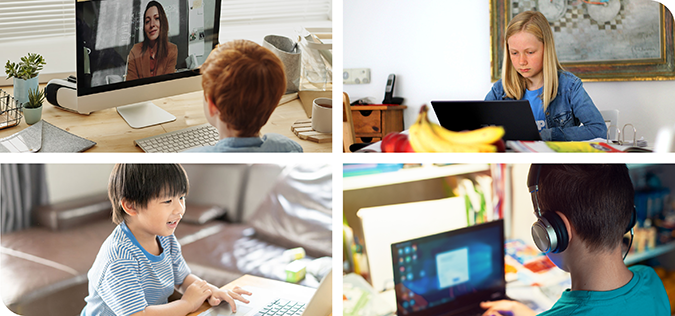
Four different children participating in online learning or using computers.

Planning for increasing pupil numbers

One headteacher stated that, when the time comes to increase the number of pupils attending school, leaders will try to increase capacity safely by:

  • using classrooms that aren’t currently used as base rooms for year groups

  • continuing to stagger school starting times, end times, lunchtimes and break times to ensure that pupils do not gather in groups unnecessarily

This headteacher recognises that returning to full capacity will probably mean reducing social distancing guidelines.

Another school is planning to repurpose the school hall when all pupils return in September, as well as making use of unused teaching spaces. It is setting up room dividers in the hall. This means that, even as social distancing measures are eased, pupils will have more space and it will be possible to create smaller teaching groups.

A third school is planning a staggered approach for increasing pupil numbers during the first two weeks of September. For example, it plans to build up gradually the number of days that nursery and reception pupils attend. In addition, it intends to invite all Year 2 and Year 6 pupils in as full cohorts in the first instance. By the end of the second week, the headteacher expects the school to be operating at full capacity, and to look as it did before the period of school repurposing. Despite this, it will continue to limit mixing between groups, and staff will continue to adhere to social distancing measures.

Dealing with an outbreak of COVID-19

One headteacher described how the school successfully shut down one bubble following an outbreak of COVID-19 in the school. It followed Welsh Government guidance and its own pre-planned procedures to ensure that pupils from families where COVID-19 had been diagnosed were isolated and returned home. This enabled other pupils to continue with their learning.

Small groups, deeper relationships

Using small ‘bubbles’ for teaching, staff have more of a chance to listen to each pupil. Teachers feel that they know their pupils better and pupils can share their stories with staff as there is more time to talk. This has changed the school’s thinking about its approach to teaching. During the first four weeks back in September, each class will have a dedicated half hour of talk time, with each teacher focusing on a small group of six or seven pupils. During this time, teaching assistants will deliver what the teacher has planned, to the rest of the class. 

Moving forward with the Curriculum for Wales

Many schools are keen to continue with their preparations for the Curriculum for Wales, despite recent setbacks. Leaders in one school have planned two in-service training days for the beginning of term where staff will complete joint planning based on the principles of Curriculum for Wales. One focus will be the curriculum lead working with key stage 2 teachers to bring foundation phase methodologies into use more widely in Years 3 to 6. The school has decided to stop ‘setting’ pupils by ability for literacy and numeracy from September. Instead, it will place all pupils in mixed ability, whole class groups that focus better on providing them with more holistic and integrated experiences. 

Limiting the impact of future lockdowns

One school in a socially disadvantaged area acknowledges that parental engagement is key to the success of blended learning. Staff have invited parents into school to learn alongside their child. This encourages them to support their child at home. Staff spend time with pupils to ensure that they are confident at accessing digital learning platforms as independently as possible, as the vision is for pupils to be able to move through stages of blended learning seamlessly, should the need arise.

In another school, pupils have used digital platforms and other apps successfully through Hwb. Blended learning between classroom and home has become seamless. During face-to-face teaching time, staff present and explain homework, which had previously been distributed on a photocopied sheet, and will now transfer to online platforms.

To strengthen this approach and to reduce the impact on those less confident in their digital skills, the headteacher has planned training events for parents. During these events, parents log on to social platforms and have tours of the apps and facilities, including important safeguards that their children will be using. This will help the school in the event of further lockdowns. 

Parental feedback

Parents have respected the school’s formal, but staggered drop-off and collection procedures and everything has run smoothly. Parents like the routines, the well-organised handover arrangements and visible staff presence, albeit from a suitable distance. The school is confident to continue these systems for September as all parents seem to understand them, and they work successfully.

Managing expectations

Leaders and staff at one primary school are working together to devise a model of blended learning for September. Planning for learning for each week will be based on setting ‘expectations for the teacher’, ‘expectations for the child’ and ‘expectations for the parent’. The headteacher feels that it is crucial to be up front with parents about what the school will expect from them and to gain ‘buy in’ for this during this preparatory phase. It is not their intention to lower their expectations of what children can achieve in their learning. They will ‘expect what we normally do, but with a lot of wellbeing wrapped around these expectations’. Leaders think they can manage to provide the whole curriculum, but will review this over time. They feel that, with fewer pupils in a class at any one time, teachers will be able to cover a lot of ground with small groups and individualised learning approaches. The week pupils are at home will be an opportunity for them to consolidate and extend this learning.

Encouraging engagement with distance learning

Knowing your pupils, families and communities well has proved key to effective engagement with distance learning. For example, one primary school provides video conferencing support for a few pupils who require additional support. The headteacher has delivered books to homes where she suspects that there are very few books. The school has invested in online tools and approaches that enable them to track and monitor the time pupils spend using them. The same school runs fun competitions and provides lots of practical activities to support parents. Following requests from parents, it has timetabled activities for the day. Although pupils don’t have to do them at a specific time, parents like this kind of support because it helps to provide a focus and some parameters within which to work. Pupils keep a chart of the activities they have completed on HWB. For example, if they have done 30 minutes of exercise on some platform, they note it to share with their teachers.

Supporting Welsh-medium education

In many Welsh medium schools, most pupils come from homes where Welsh is not spoken. The staff in one such primary school have tried to overcome this by providing pupils with learning activities that encourage them to use their Welsh as naturally as possible. The focus is on reading, understanding and, most importantly, speaking Welsh. Opportunities for pupils to develop presentations and create their own versions of Welsh songs and rhymes have been particularly successful. Pupils share their work with their teachers, who then provide feedback that focuses on the positive, and this has encouraged a relatively high number of pupils to take part.

Using reading apps

Pupils in one primary school can access an app to which the school subscribes that allows pupils to read books and complete quizzes on books they have read. This means that teachers can monitor to some degree what pupils read and gain some idea of their understanding and progress with their reading.

Encouraging remote learning

One primary school has managed to encourage most of its pupils to engage in learning to some extent, either online or through receiving paper work packs. Soon after schools closed, the school lent 60 laptops out to families without suitable equipment to engage with online learning. Staff also set up and manned a technical helpdesk to support parents to help their children access online learning on various platforms. The headteacher analyses levels of pupil engagement and staff are working to reach families where engagement levels are low, especially by supporting parents who are struggling or feeling anxious.

Planning blended learning

The headteacher of one primary school has produced a very comprehensive draft recovery plan that sets out clearly all aspects of how the school will evolve towards a new approach of blended learning. It includes logistical aspects and curriculum arrangements, and sets out the responsibilities of each member of staff, including how they will support home learning, for example “when I’m on site, what will I be doing?”.It includes what staff can expect from leaders to support them in their work and wellbeing. The next step will be to develop a communication strategy for parents. The school’s current plans for September include classes being split into groups of eight with home learning resources designed based on the skills and focus of their days in school. Teaching assistants and teachers who are shielding have been allocated to support this home learning. The school is designing its recovery curriculum using the areas of learning and experiences. Teachers will focus on wellbeing, languages, literacy and communication, mathematics and numeracy and ICT, with pockets of contextual learning and experience based on the other areas of learning. The approach is intended to ensure that teachers prioritise the development of knowledge and skills that children need to become resilient and high performing in the future rather than coverage.

A whole-school focus

One primary school recognised that parents with children of different ages find it challenging to deal with various topics at the same time. To try and overcome this, the whole school is focusing on one theme this term, with activities that can be differentiated for the age and ability of the pupils. This has the added bonus of encouraging collaboration between teachers, which may lead to enhanced appreciation of progression for pupils.

Online learning pods

One primary school has developed its online learning significantly. The school is organised into four learning pods. Pupils in each pod can access a series of planned learning shared on the school’s website. Teachers launch the week’s suggested activities on a Monday, usually with a video. The headteacher surveyed parents’ thoughts and responded to their view that the children wanted to see more of their teachers by developing video launches for each week’s activities and by changing from a set of tasks that had to be completed to suggested activities. Access to the school website and learning activities is simple, so most pupils engage in learning at home. The children are taught in their pods. The school has provided laptops for the very few pupils from disadvantaged families to ensure that they can take part in online learning.

Celebrating achievement virtually

The parents and children of one primary school appreciate the headteacher holding a virtual weekly celebration assembly for pupils. It is a familiar part of the pupils’ week in school before lockdown and helps to maintain some sort of connection with life before lockdown. The headteacher then delivers the certificate and pencil prize to pupils personally.

Providing feedback in real time

Ysgol Llannefydd is a small rural school in Conwy county. During the second national lockdown key workers’ children, who were attending school, and pupils who were learning at home followed the same structured timetable. The school used a video conferencing platform for informal catch-up sessions with children twice a week. During other lessons, staff responded to the tasks released in documents shared online at set times during the day in line with the timetabled lessons. For example, having learnt about Neil Armstrong, pupils created a job advertisement for the post of astronaut. The teacher followed pupils’ progress in real time on his screen, flicking between each pupil’s work and suggested improvements to their work as they went along.  

Live-streaming pedagogy

At Ysgol Waunfawr, Gwynedd, nearly all pupils in key stage 2 engaged well with distance learning tasks. This included three live sessions per week for each class. In responding to a questionnaire, parents were particularly grateful to be able to see the teacher model how to approach tasks. For example, a teacher used a virtual whiteboard shared on her screen to explain the concepts of area and perimeter. She drew shapes on a squared background in real time and showed pupils how to find the sum of the perimeter, highlighting each side as she went along. Pupils could then watch her colouring the boxes to find the shape’s area. She then asked pupils to find the area and perimeter of other shapes provided in a shared document.

Meeting the needs of all pupils when learning from home

At Ysgol Plascrug, Aberystwyth, nearly all pupils responded well to tasks set online. Teachers felt that the introduction of live-streaming sessions contributed well to the engagement of pupils who like to learn visually. 

In the foundation phase, pupils were invited to attend small group sessions online every day. From Year 2 up to Year 6, there was also a daily whole-class session before pupils broke out into smaller groups. These groups were based around pupils’ needs so that they could discuss work set at a level suitable to their needs. The headteacher felt that this helped to maintain pupil engagement. Teachers also posted online videos of themselves presenting tasks. Across the school, pupils received two tasks a day in addition to ongoing provision and support materials.  

The headteacher led an online assembly on a weekly basis to maintain the ethos of the school.  The school also held a web-based technological ‘drop-in’ session for parents to help with the use of Teams. The school offered a similar session specifically for refugee families held in Arabic. 
 

Increasing engagement with distance learning

Leaders at Hywel Dda Primary School in Cardiff developed a comprehensive but simple way to analyse how well their pupils engage in the online learning that the school provides. In the first lockdown, they identified who did and did not take part in online learning, but this did not provide teachers with useful enough information to target support for those who could do with a little extra intervention.  During the second school closure, leaders refined the system to take account of the percentage of tasks completed, highlighting five levels of engagement from those who did not engage at all to those who completed over 80% of tasks.  The system also tracked those pupils who only completed learning tasks when they attended the school’s hub provision.  This more detailed information enabled the school to identify and prioritise the pupils and families that needed the most support to engage with learning at home. 

Mathematics and numeracy in the outdoors

During the pandemic, staff at Johnston CP School in Pembrokeshire continued to prepare for the implementation of the Curriculum for Wales in September 2022. The school used the time to evaluate how the four purposes aligned with their approach to teaching mathematics and developing numeracy skills. They identified ways to enhance their use of outdoor spaces to offer authentic learning experiences, make learning exciting and challenge themselves with regard how to introduce certain concepts. The aim was to plan more opportunities for pupils to construct, explore and discuss ideas in contexts that involved real-life problems. They worked with a National Park to develop a site adjacent to the school. They created areas for growing vegetables, a fire pit circle, built a bridge over a stream and created an orchard. This provided many rich numeracy activities. For example, pupils worked in groups to cut fabric membrane to stop grass from suffocating the newly planted apple trees, taking into account the required radius and working out the circumference. 

Families help to influence teachers’ planning

At Ysgol Foel Gron in Gwynedd foundation phase staff wanted to make their online provision as effective and successful for as many pupils as possible. The staff sent a survey out to parents asking them about the resources they had at home to help their children. Teachers used the findings of the survey as an audit of what practical resources families had at home, for example paint, colouring pencils, paper, building blocks, glue and other resources. Teachers used this information to adapt the tasks accordingly. The school is very happy with the level of engagement. For example, nearly all pupils made ‘hearts’ out of toy building blocks during a science and technology activity. Staff also asked parents about their electronic devices to see how best to set work for the class. The school provided computers for those who were struggling to access the internet and sent out paper packs for those without printers. 

‘Art Friday Focus’ encourages creative output during lockdown

Bigyn County Primary, Carmarthenshire, developed ‘Art Friday Focus’ as part of its distance learning offer. This allowed pupils to continue to contribute to an international project they had started working on in class that involved pupils in several other countries. The headteacher ran these sessions, which focused on discussing the work of a famous artist in a relaxed environment. The headteacher provided pupils with examples of work by the artists and, during the Friday sessions, pupils shared and discussed what they had produced. Many parents uploaded examples of the work to the school’s social media page, which encouraged engagement and contributed to creating a sense of community. This session also enabled teachers to take valuable planning, preparation and assessment time during lockdown. 

Mapping out whole-school distance learning provision

From the first lockdown, leaders and staff at Ynyshir Primary in Rhondda Cynon Taf recognised that providing pupils and parents with tutorial videos, recording lessons and providing live lessons would help with progressing learners’ skills and understanding, particularly for those concepts that are difficult for parents to explain. From January, leaders mapped distance learning provision on a weekly whole school ‘live lessons and video planner’. This detailed when live lessons were taking place for individual classes and when live wellbeing ‘check in’ sessions with pupils were scheduled. They were mapped so that no two teachers or classes were online at the same time. This helped to reduce the challenges for families. There were agreed protocols in place for pupils and their parents when engaging in online learning. 

Developing reading skills during lockdown

Pembroke Dock Community School in Pembrokeshire set up a programme to support pupils with reading, as it wanted to avoid pupils regressing while the school was only open to key worker and vulnerable children. It reassigned a group of support staff as ‘Reading Ambassadors’ to run the programme with around 200 pupils. These pupils were selected as they were not engaging fully with home learning or reading regularly at home. Each child received a one-hour weekly slot to come into school to work with a teaching assistant in a safe environment. Through this programme, all pupils were able to borrow school reading books and parents and pupils were given support in accessing online reading material. Many of the pupils were also provided with lunch and breakfast when they came to school. Where appropriate, the school also provided a breakfast pack to take home to have the following day. 

Supporting Welsh-medium pupils learning at home

Ysgol Gymraeg Melin Gruffydd, Cardiff, made extensive use of live streaming and video clips to share guidance and instructions with pupils. Teachers were free to adapt how and when to run these sessions, varying the method depending on the context of the class and the task. Some teachers started live sessions with a whole class group, before continuing to work with small groups, supporting their learning. Others, often in the foundation phase, tended to start with small groups, and then bring the pupils together for a class session. This was a useful opportunity to review the learning, and to give pupils the opportunity to speak to their friends. Staff also recorded instructions bilingually and shared these with the pupils in video clips. This enabled non-Welsh speaking parents to support their child’s learning at home. To ensure that pupils were not completely isolated from their friends, staff organised regular virtual sessions for them to chat together informally or to work together on specific tasks such as creating presentations on a particular theme. 

Postiadau Diweddaraf


Advice and guidance for government

Our aim in Estyn is to support Welsh education and training as a whole – schools, non-maintained settings, teachers, senior leaders, learners, parents, post-16 providers and others – by providing the government with our independent and objective evidence and advice.

As you know, we suspended all core inspection and other visits as soon as we could. Currently, we’re keeping in touch with education and training providers through phone and video calls and will continue to do this for the time being. It’s been really helpful to hear from schools and others about how they are supporting the wellbeing of learners and staff and how they are dealing with the current challenges.

We’ve also redeployed staff to Welsh Government and have supported the government’s continuity of learning for children and young people project.

Learning from what works well

We will not inspect maintained schools next academic year (September 2020 – July 2021). Once schools have readjusted to the new situation, our inspectors will visit to listen to concerns and to identify what is working well.

The conversations we’re currently having with schools and our future engagement visits are to gain a national picture. It’s not to judge the approaches of individual schools, but to gather intelligence on the education system as a whole, and to gauge the immediate and longer-term impact of the coronavirus crisis on learning and on the wellbeing of pupils and staff.

They’ll also be an opportunity to capture and share innovative and effective practice.

Follow-up activity

We will not be continuing with formal monitoring visits for schools and other providers in follow-up. Although a few would like us to do so, we do not think this is appropriate under the current circumstances.

We have already been in touch with providers currently identified as causing concern to explain what will happen next and to offer the support of an individual HMI.

Listening and adapting

These are uncertain times, and we’re committed to being supportive and flexible in how we carry out our role at the moment.

We will work with stakeholders from sectors other than maintained schools on how we will adapt our arrangements for them for the coming year.

We will adapt as the situation develops and keep you fully informed of our intentions.

Stay safe and stay learning.


Read the full statement

Postiadau Diweddaraf


Improving teaching and learning

Schools that successfully improve the quality of teaching and learning and continually invest in their staff. They:

  •  encourage honest evaluation.
  • talk openly about their strengths and areas for improvement.
  • encourage teachers to take reasonable risks and experiment with different approaches, while always keeping the benefits for pupils at the heart of any change.
  • focus on monitoring the quality of teaching in relation to how well pupils do over time rather than making simplistic judgements about the quality of teaching by grading individual lessons.
  • use research-based evidence to solve teaching problems.

Teaching and learning, and the new curriculum

The 12 pedagogical principles of good teaching and learning1 is vital for schools to consider as they shape the new curriculum for Wales.

Good teaching and learning

Postiadau Diweddaraf


Getting together as a team of inspectors is an important part of our professional learning, but it’s not always easy or practical to do. With so many inspectors living and working right across Wales, we have to be quite creative with opportunities to meet and not a second is wasted.

For the past few years, many of you will know that we have been working closely with the Welsh Government, local authorities, regional consortia and schools as everyone prepares for wide changes in education. It’s important that all our inspectors understand the journey that providers are making as they prepare for these reforms. We’ve been using these professional development weeks for just this purpose.

For example, inspectors who have worked closely with pioneer schools to develop the areas of learning and experience of the new curriculum update us regularly. They encourage us to talk about the new and exciting things we are beginning to see happen in schools so that we know the sort of things we might expect to see when we are out-and-about inspecting schools around Wales.

Other colleagues have been involved in new or different ways of working, including carrying out some pilot engagement visits. They share their experiences with wider groups of inspectors, and together we consider the pros and cons of any changes. As you might imagine, people who spend their working lives being evaluative bring a wide range of ideas and opinions to the table. This encourages energetic discussion, which helps to shape decisions about how we inspect and about how we might work in the future. Senior leaders here expect and welcome contributions to decision-making from all inspectors and this keeps us all interested and engaged in our work.

Professional learning goes beyond the times we meet as a whole group. Throughout the year we shadow inspections in sectors we are less familiar with and go on paired visits with a specific focus. For example, a group of primary and secondary colleagues visited a secondary school in England that has a particularly imaginative and innovative approach to the curriculum. It was a real eye-opener, and made us think carefully about how we can encourage schools to think differently and be braver with the curriculum. On our return, we shared our experiences, which inspired others to do further reading and research on its philosophy and success, but nothing can quite replicate the understanding we gained by being there, meeting the teachers and engaging with the pupils.

Earlier in the blog, I talked about learning from others outside the organisation. Regular updates from a wide range of partners and stakeholders on a broad range of topics are a regular and crucial part of our professional learning. A recent session learning more about Adverse Childhood Experiences and the training currently being carried out with schools around Wales served as a timely reminder that education reform needs to improve the experiences and outcomes of all learners. If it doesn’t, why are we doing it?

All inspectors are carrying out a focused professional enquiry linked to our changing approach and their own interests. It’s early days, but colleagues have welcomed and valued the opportunity to participate in this type of professional learning activity. Personally, I’ve chosen to look more closely at how we evaluate provision to develop pupils’ digital competence in secondary schools. I’ve used our inspection reports and other publications to gather a baseline of the evidence we currently capture, and I’ll try out some new approaches over the next few months. After my research I’ll share my findings with my colleagues and will begin making amendments to our inspection toolkits.

Postiadau Diweddaraf


Healthy and happy

In June 2019, our ‘Healthy and happy’ report explored the impact that schools in Wales have on pupils’ health and wellbeing. We found that twice as many primary schools as secondary schools were supporting pupils very well.

The report covers many of the issues already mentioned at the start of this post that affect health and wellbeing. However, there is a very important headline message to the report that mustn’t be lost amongst discussions about the individual issues schools need to have a ‘whole-school’ approach to supporting pupils’ health and wellbeing.

A whole-school approach

What do we mean by this? It’s that schools need to make sure that everything about the school gives a consistently positive message to pupils.

Let’s think about what happens when there isn’t a whole-school approach. Here’s a few examples:

  • lessons about bullying lose their value if pupils aren’t happy with how the school deals with allegations of bullying
  • learning activities around healthy eating have little impact if the food served to pupils, and the dining experience don’t promote healthy eating
  • posters promoting exercise won’t make much difference if the school doesn’t provide enough time for pupils to be active.

In short, the everyday experiences of pupils in school have the greatest impact – positively or negatively – on their health and wellbeing.


Postiadau Diweddaraf


It’s not an inspection

We’ll be in touch around 10 days before we visit. But there won’t be a formal notification period because it’s not an inspection.

During our visits, we’ll encourage, reassure, probe and provide a fresh perspective to staff on their journey to fulfilling the aims of the new curriculum.

There won’t be a written report for each school – the key outcome for us is that we gather important information about how the Curriculum for Wales is being progressed in schools across Wales.

Planning the visit

Before we arrive, the inspector will call the headteacher to agree a broad outline for the day. Activities will include discussions with senior leaders, governors, staff and pupils and we’ll also visit lessons and talk to pupils about their work.

Making the most of the visit

It’s a valuable chance for schools and HMI to have an open, trusting and professional conversation. Our experienced inspectors will be a sounding board for schools to share their early plans and initial developments.

The school can explain any obstacles to progress and explore with us possible approaches to overcoming these challenges. Inspectors will have observed other schools in similar circumstances facing similar challenges and will be able to signpost the school to interesting practice elsewhere.

Professional conversations between inspectors, leaders and other school staff are a key feature of the visit. 

On the visit it’s important that schools direct us to particular developments that are progressing well and highlight emerging practice across the school.  Our conversations with the school around what the visit looks like are important and will help to make sure that we all gain maximum benefit.

But we don’t expect schools to prepare specifically for the visit.  For example, we won’t be asking to see any documents unless the school wants to share these. Schools can get the best out of engagement visits by thinking generally about their challenges and successes in relation to curriculum reform.

In addition, we’ll share with schools our plans for inspections from 2021 as well as other activities happening in the transition year whilst inspections are partially suspended. These will include conferences and training opportunities where we’ll share effective practice to support schools with curriculum reform. 

After the visit

We’ll share regularly the national picture with the Welsh Government about how much progress schools are making in their curriculum for Wales work. This will help the government to be flexible if there needs to be additional support or resources to help schools with the developments. We will publish update reports and explore ways to share interesting practice so everyone has a common understanding of progress. 

Until then…

Between now and 2020, we’ll continue to pilot our engagement visits, increasing our sample and trying them out in different types of schools, for example all-age and federated schools. We will also publish our ‘Engagement visit guidance’ on our website towards the end of the spring term.   

Schools have given us very positive feedback following the pilot visits. Rhian James-Collins, Head teacher of Ysgol Gymraeg Bryn y Mor told us that:

…the visit prompted us as a school to evaluate where we are on the journey in relation to the introduction of the New Curriculum for Wales and to reflect on the impact of the strategic priorities in preparation for change. It was also an opportunity to share what we have done so far

John Kendall, head teacher of Risca Comprehensive School felt that:

the engagement visit was very useful and we were pleased to be chosen to be part of the pilot.  There was no excessive preparation required, but we had plenty of notice to think about what we wanted to discuss. Even though it was just one day, the activities we worked on with the HMI during that time were very productive. The learning walks, book looks, and meetings with both staff and pupils were followed by really constructive and helpful feedback. The day was conducted in a supportive and collaborative way, leaving us feeling both confident in what we are already doing and with some useful ideas about other ways in which we can help move the school forward.”

We’ll be working closely with local authorities and regional consortia on how we can share the broad findings from the engagement visits with them so that they can also see and understand the progress being made by schools.  

Still got questions? Read our FAQs

Postiadau Diweddaraf


What’s a link visit?

Once a year, our inspectors make an informal visit to each college or training provider. Each college has their own dedicated link inspector. This is a chance for us to build relationships with the colleges, gather up-to-date evidence about their work and support quality improvement. We also carry out similar visits to training providers and providers of adult learning in the community.

Each visit takes two to three days. We meet with senior leaders and a selection of other key staff, depending on the specific focus. We also look at key documents and may do some learning walks or talk to students.

At the end of the visit, we have a discussion with leaders about what we’ve found to help with the college’s ongoing improvement.

What is the focus?

The topics that we focus on change from year to year. At the moment, we’re exploring:

  • Self-evaluation and future priorities for improvement
  • Post-16 consistent performance measures
  • Professional learning and the new standards
  • 14-16 provision
  • Site access, security and emergency procedures
  • Learner engagement – learner voice and learner complaints

There’s also an opportunity for colleges to share any current issues. Likewise, we discuss inspection developments with college leaders.

If a college has been recently inspected, we discuss their progress against any recommendations in the inspection report.

How do the visits support improvement?

College leaders value the opportunity to talk to an inspector outside of a formal inspection. The link inspector can help colleges reflect on and refine their strengths and areas for improvement, and are able to highlight national effective practice that might be helpful.

The evidence we collect during these visits is used to inform the advice we provide to the Welsh Government through HMCI’s annual report, thematic reports and our contributions to national working groups.

The visits also help us to recognise how we can strengthen our own inspection guidance. For example, link visits have highlighted how colleges carry out their new duty to help prevent people being drawn into terrorism. This supported us to develop our supplementary guidance on inspecting safeguarding in post-16 provision. It also helps colleges to improve and share their practice in this area.

The discussions we have during link visits can help to identify topics that might benefit from a more in-depth thematic inspection across Wales.

How can colleges make the most of the link visit?

It’s an opportunity to reflect on practice within the college and consider how it could be further improved. There’s no expectation for college staff to do anything to prepare beforehand. The link inspector shares broad areas for discussion with college leaders and asks for any relevant documents and the names of staff to talk to.

The discussions are most beneficial when leaders are open and honest about the quality of their work. If a college only tries to showcase the very best of their work, they miss out on an opportunity to have a reflective discussion with their link inspector about their current challenges. We provide an independent perspective that can help leaders reflect on their students’ experiences.

The visit is also a chance to build the relationship between the link inspector and college leaders so that they know there’s someone in Estyn they can call if they have any questions.

College leaders should embrace the opportunities that link visits provide, and make the most of discussions with inspectors to find out about best practice and challenge your college to keep going from strength to strength.